
When I first started using AI tools for content creation, I thought AI would automatically give perfect answers. But after using tools like ChatGPT for blog writing, video ideas, captions, and scripts, I slowly understood one important thing: AI gives better results when we give better instructions.
This is where prompt engineering comes in. Many beginners use AI by typing very simple commands like “write a blog” or “give me video ideas.” Sometimes the result looks average, boring, or not useful. But when we explain the topic, audience, tone, format, and purpose clearly, the AI output becomes much better.
As a creator, I use AI tools to save time in writing, editing planning, content research, and digital skill learning. For me, prompt engineering is not a complicated technical word. It is simply the skill of asking AI in the right way.
What Is Prompt Engineering?
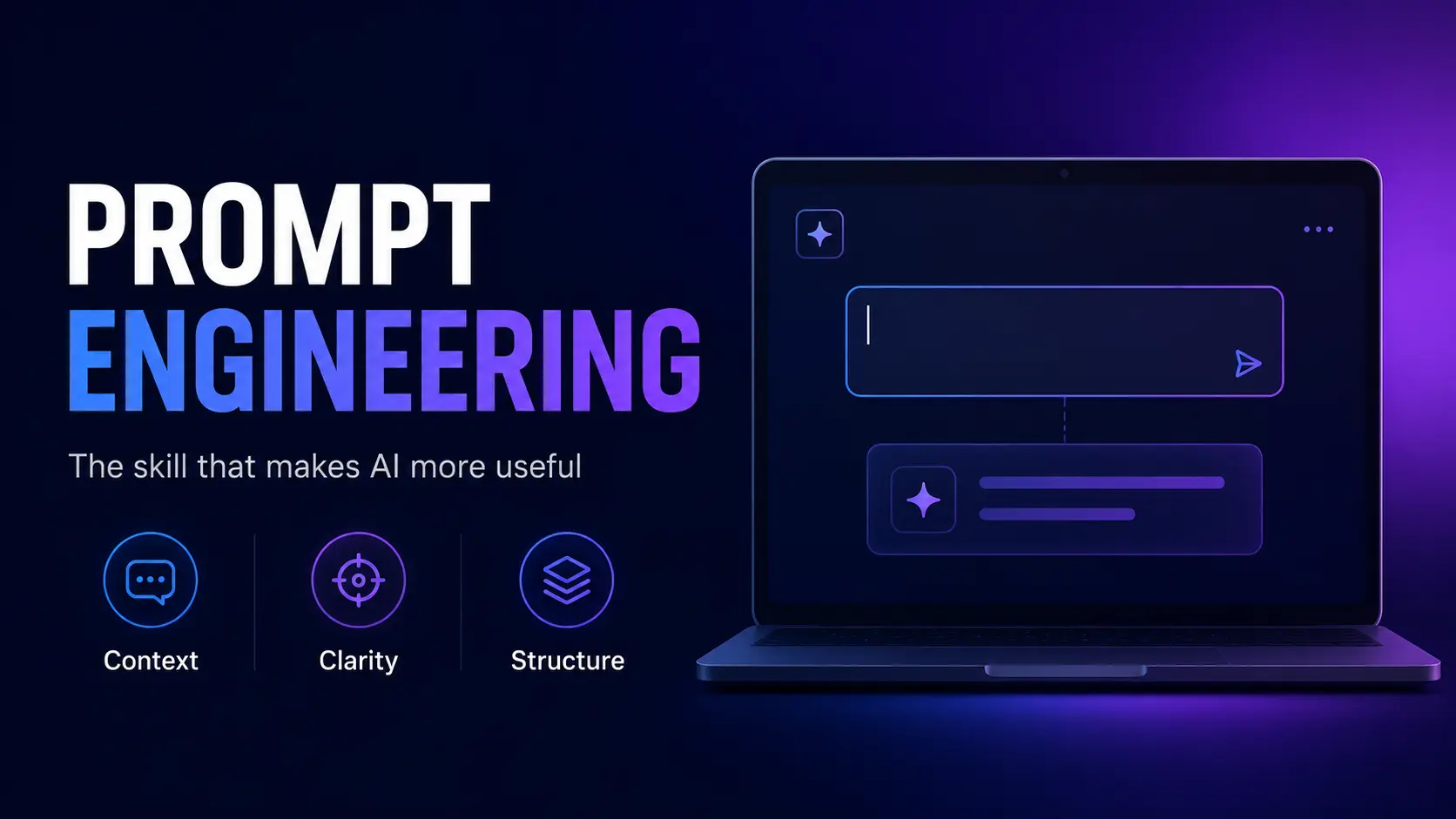
Prompt engineering is the process of writing clear and useful instructions for AI tools so they can give better answers. A prompt is the message or command we type into an AI tool. Engineering the prompt means improving that message to get a better result.
A simple one-line meaning is: prompt engineering means giving better instructions to AI tools to get better output.
For example, if I type, “Write a YouTube script,” the AI may give a very basic script. But if I type, “Write a 60-second YouTube Shorts script on free AI tools for beginner creators in India. Use simple English, add a strong hook, and keep the tone practical,” the result will be much better.
The difference is not only the AI tool. The difference is the prompt.
Simple Meaning of Prompt Engineering
In simple words, prompt engineering means learning how to talk to AI properly.
Think of AI like an assistant. If I tell an editor, “Make a video,” they will be confused. But if I say, “Make a 30-second reel from this clip, add subtitles, use fast cuts, keep the music energetic, and highlight the main tip,” the editor will understand better.
AI also works in a similar way. It needs direction. When we give clear direction, it can help us better.
For beginners, this is very important because many people think AI is not useful after getting one bad answer. But sometimes the problem is not the AI. The problem is the weak prompt.
READ:What Is Artificial Intelligence? A Beginner-Friendly Explanation
How Does Prompt Engineering Work?
Prompt engineering works by adding context to your instruction. Context means extra details that help AI understand what you want.
A good prompt usually includes the topic, audience, tone, format, length, and goal.
For example, when I write a blog for TechyHi, I do not just ask AI to write an article. I give details like simple English, beginner-friendly tone, Indian audience, creator perspective, proper headings, examples, and practical explanation. Because of this, the article becomes more useful for readers.
If you are creating a video, you can mention the platform. A YouTube video needs a different style. An Instagram reel needs a short and catchy style. A LinkedIn post needs a professional but human tone.
This is why prompt engineering is useful. It helps AI understand the exact result we need.
Real-Life Examples of Prompt Engineering
Let’s say you are a student and want to understand artificial intelligence. A weak prompt is: “Explain AI.” A better prompt is: “Explain artificial intelligence in simple English for a beginner student. Give one example from daily life.”
If you are a video creator, a weak prompt is: “Give reel ideas.” A better prompt is: “Give me 10 Instagram reel ideas about AI tools for beginner content creators. Add a hook and short explanation for each idea.”
If you are a blogger, a weak prompt is: “Write blog on prompt engineering.” A better prompt is: “Write an 800-word beginner-friendly WordPress article on prompt engineering. Use simple English, practical examples, and a creator’s personal experience.”
If you are a local business owner, you can ask: “Write a short WhatsApp message for customers about a new discount offer at my mobile accessories shop. Keep it friendly and simple.”
These examples show that prompt engineering is useful for creators, students, freelancers, bloggers, and small business owners.
Why Is Prompt Engineering Important?
Prompt engineering is important because AI tools are becoming part of daily digital work. People are using AI for writing, designing, editing, coding, research, marketing, and learning. But without proper prompts, AI results can look generic.
For content creators, prompt engineering saves time. It helps in creating video scripts, captions, titles, hooks, thumbnails ideas, and content calendars.
For bloggers, it helps in making article outlines, FAQs, introductions, and simple explanations. For students, it helps in understanding difficult topics. For freelancers, it helps in emails, proposals, and client communication.
In my own content work, I have noticed that a detailed prompt gives me a better starting point. I still edit the final content, but AI helps me reduce the blank page problem.
Benefits of Prompt Engineering
The biggest benefit of prompt engineering is better quality. When your prompt is clear, the answer becomes more focused.
It also saves time. Instead of asking the same thing again and again, one good prompt can give a strong first draft.
Prompt engineering also improves creativity. If I am stuck with video ideas, I can ask AI to give ideas for a specific audience, like beginners, students, creators, or local business owners.
Another benefit is consistency. Creators can create prompt templates for blogs, reels, YouTube videos, captions, and social media posts.
For beginners, prompt engineering also builds confidence. You do not need coding. You only need to explain your requirement clearly.
Limitations of Prompt Engineering
Prompt engineering is powerful, but it is not perfect. Even with a good prompt, AI can make mistakes. It can give wrong facts, outdated details, or generic answers.
That is why human checking is important. I never suggest copying AI content directly without review. Whether it is a blog, video script, or business message, you should check the facts, improve the language, and add your own experience.
Another limitation is overdependence. If we use AI for everything without learning the actual skill, our own creativity may become weak. AI should support our work, not replace our thinking.
Prompt Engineering for Creators
For creators, prompt engineering is one of the most useful AI skills. It helps in almost every stage of content creation.
You can use prompts for video ideas, scripts, hooks, captions, blog outlines, thumbnail concepts, and content repurposing. For example, one long YouTube video can become shorts, blog points, Instagram captions, and LinkedIn posts with the help of AI.
As someone who works with content, editing, blogging, and AI tools, I feel prompt engineering is like giving proper direction to your digital assistant. The better your direction, the better the output.
But the final content should always have your voice. AI can give a draft, but your experience makes it real.
My Personal View on Prompt Engineering
My personal view is that prompt engineering is not just an AI skill. It is a communication skill.
When I use AI for TechyHi articles or creator-related ideas, I do not expect AI to do everything perfectly. I use it to get structure, ideas, and speed. After that, I add my own examples, improve the flow, and make it useful for beginners.
For me, the best way to use AI is simple: give clear instructions, check the output, edit it properly, and add human touch.
Conclusion
Prompt engineering means writing better instructions for AI tools. In simple words, it is the skill of asking AI in the right way.
It is useful for creators, bloggers, students, freelancers, small business owners, and anyone who wants to use AI properly. A good prompt can save time, improve quality, and help you get better results from tools like ChatGPT.
But AI is not perfect. The best result comes when we combine AI support with human creativity, real experience, and proper editing.
For beginners, prompt engineering is one of the easiest AI skills to learn. You do not need technical knowledge. You only need clarity. The better you explain your need, the better AI can help you.