
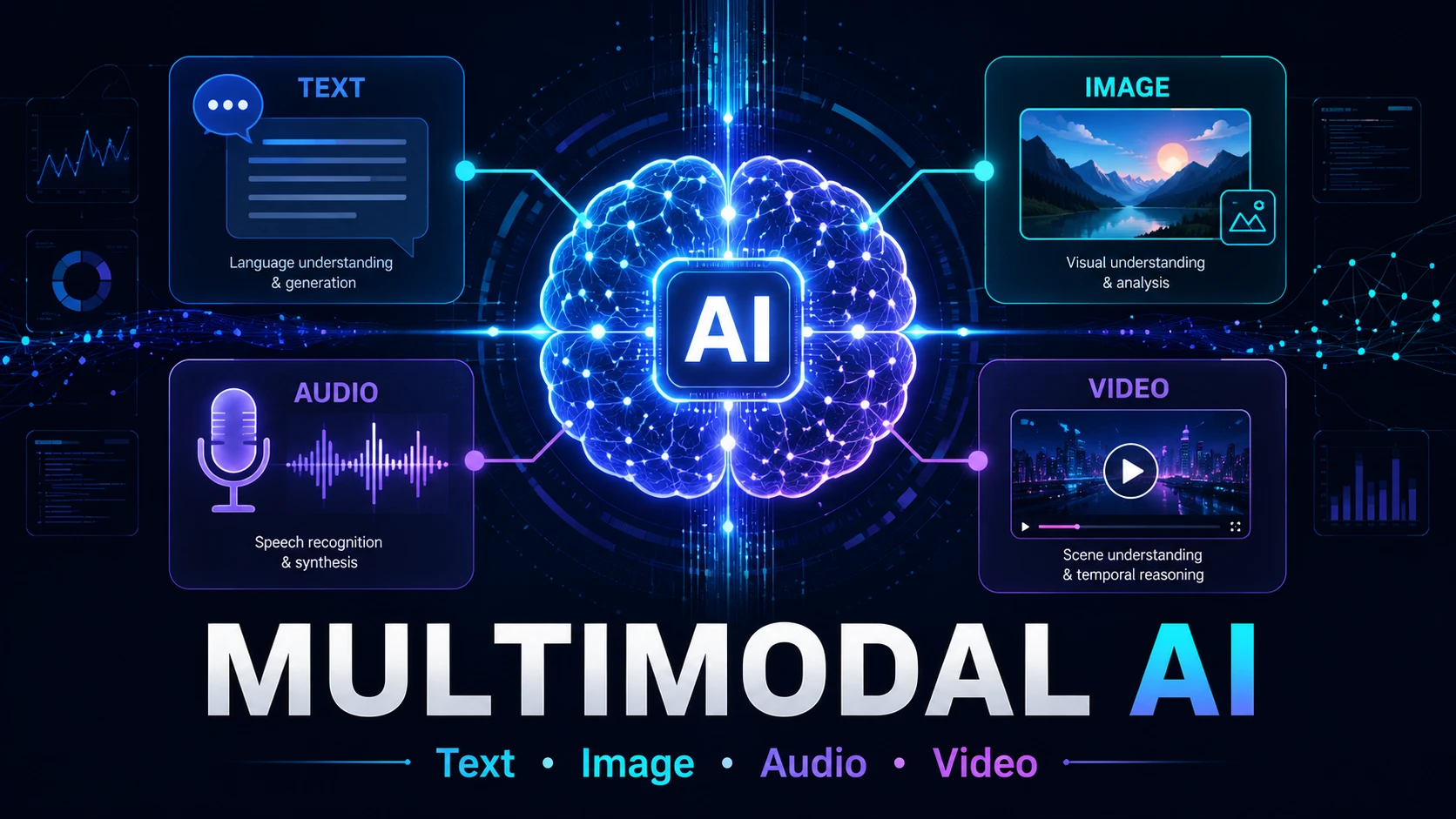
Artificial intelligence is changing very fast. A few years ago, most people used AI mainly for text. We asked questions, wrote emails, generated articles, created captions, or summarized documents. But now AI is not limited to text only. Today, AI can understand images, listen to audio, read documents, analyze videos, and combine all these formats to give better answers. This is called Multimodal AI.
From my creator perspective, this feels like a big shift. When you work with cameras, editing, visuals, sound, captions, and storytelling, you understand one thing clearly: real content is never only text. A video has visuals, voice, music, mood, pacing, text, and emotion. Multimodal AI is important because it helps machines understand information in a more human-like way.
What Is Multimodal AI?
Multimodal AI is a type of artificial intelligence that can understand and process more than one type of data, such as text, images, audio, video, documents, code, and other inputs. IBM explains multimodal AI as AI models that can process and integrate information from multiple modalities like text, images, audio, video, and other sensory inputs.
In simple words, multimodal AI is AI that can understand different forms of information together. For example, a normal text-based AI can only understand your written question. But a multimodal AI system can understand your text question, look at an image, listen to audio, read a document, and then give a better answer.
Simple Meaning of Multimodal AI
The word “multimodal” has two parts. Multi means many, and modal means mode or type of data. In AI, these different data types are called modalities. Text is one modality, image is one modality, audio is one modality, and video is another modality. When an AI system can work with more than one modality, we call it multimodal AI.
A simple example is this: you upload a screenshot of a website and ask AI, “How can I improve this design?” A multimodal AI tool can look at the screenshot, understand the layout, read visible text, notice design issues, and suggest improvements. This is more useful than only typing a description.
Simple Example of Multimodal AI
Imagine you upload a photo of your video editing setup and ask AI, “Is this setup good for editing YouTube videos?” A text-only AI cannot properly answer because it cannot see your setup. But multimodal AI can analyze the image and understand things like your laptop, monitor, desk layout, lighting, keyboard, and overall workspace. Then it can suggest improvements like better lighting, an external SSD, a bigger monitor, or cleaner cable management.
This is the real power of multimodal AI. It does not only read your question. It also understands the visual information you provide.
Multimodal AI vs Normal AI
Traditional AI usually works with one type of input. For example, a text chatbot understands text, an image generator works with prompts and images, and a speech-to-text tool understands audio. Multimodal AI is different because it can combine multiple formats together.
For example, if you ask a normal AI chatbot, “Write a caption for my mountain photo,” it may write a general caption. But if you upload the actual photo to a multimodal AI tool, it can understand the mountains, lighting, weather, mood, colors, and travel vibe. Then it can create a more suitable caption.
How Does Multimodal AI Work?
Multimodal AI works by taking different types of input, understanding them, connecting their meaning, and generating a useful output. Google Cloud describes multimodal AI as systems that can process inputs like text, images, and audio, and convert them into different output types.
First, the AI receives inputs such as text, image, audio, video, PDF, screenshot, or chart. Then it understands each input separately. It may read text, detect objects in an image, understand speech from audio, analyze movement in video, or read text from a document. After that, it connects the information and gives an output such as a summary, caption, script, report, image idea, code, or content plan.
Real-Life Examples of Multimodal AI
Multimodal AI is already useful in many real situations. You can upload an image and ask AI to explain it. You can upload a chart and ask for a simple summary. You can upload a video and ask for key points. You can record a voice note and turn it into a task list. You can upload a PDF and ask AI to create a short explanation.
Some popular AI apps are also moving in this direction. ChatGPT supports different AI features depending on the version and plan. Google Gemini is Google’s AI assistant for writing, planning, learning, and brainstorming. Microsoft Copilothelps users with answers, writing, ideas, and productivity tasks. Claude by Anthropic is also used for writing, analysis, coding, and creative work.
Multimodal AI for Content Creators
For creators, multimodal AI can become a powerful assistant. Content creation is not only about writing captions. A creator has to research ideas, write scripts, shoot videos, edit footage, design thumbnails, create voiceovers, write descriptions, post content, and track performance. Multimodal AI can help in many parts of this workflow.
For example, a YouTube creator can upload a video and ask AI to create a title, description, chapters, Shorts ideas, thumbnail text, Instagram captions, and a blog article. A video editor can use AI to summarize client feedback, create editing notes, suggest title options, identify key moments, and prepare a delivery checklist. A blogger can upload screenshots, product photos, PDFs, and notes, then turn them into a structured article.
Multimodal AI for Video Editors
As someone who understands video editing work, I feel multimodal AI is especially useful for editors. Editing is not just cutting clips. It includes story, timing, music, color, sound, emotion, and viewer attention. A good multimodal AI tool can help by analyzing footage, understanding spoken words, reading subtitles, finding important moments, and suggesting content repurposing ideas.
This does not mean AI will replace real editors completely. Human taste, pacing, emotional judgment, and storytelling still matter. But AI can reduce repetitive work and help editors focus more on creativity.
Multimodal AI in Business
Businesses deal with many types of data every day, including emails, product images, customer calls, invoices, documents, videos, reports, and chats. Multimodal AI can help businesses understand this data faster. For example, a customer support system can read a customer message, check an uploaded product image, understand invoice details, and generate a helpful reply.
Businesses can use multimodal AI for customer support, document processing, product search, sales reports, training videos, marketing content, meeting summaries, and quality checks. This can be very useful for small businesses, agencies, startups, and local brands.
Multimodal AI in Education
Multimodal AI can also make learning easier. Students do not learn in only one way. Some students understand better through text, some through images, some through videos, and some through audio. With multimodal AI, a student can upload a diagram and ask for a simple explanation. They can upload lecture audio and convert it into notes. They can upload a math problem image and ask for step-by-step guidance.
This can make education more practical and interactive, especially for students who need simple explanations.
Multimodal AI in Healthcare
Multimodal AI can support healthcare by helping analyze different types of information such as medical images, lab reports, doctor notes, patient history, and symptoms. However, healthcare is a sensitive area. AI should support qualified doctors, not replace them. For serious symptoms, diagnosis, treatment, or medical decisions, people should always consult a qualified medical professional.
This is important because AI can make mistakes, and medical decisions need expert human judgment.
Benefits of Multimodal AI
The biggest benefit of multimodal AI is better understanding. When AI gets more context from text, images, audio, and video, it can give better results. It also makes interaction more natural because humans do not communicate only through typing. We speak, show images, watch videos, listen, and explain things visually.
Multimodal AI can save time by converting one type of content into another. For example, a video can become a blog post, an audio note can become a task list, a screenshot can become a design review, and a PDF can become a summary. It is also useful for creators, businesses, students, designers, marketers, and professionals.
Limitations of Multimodal AI
Multimodal AI is powerful, but it is not perfect. It can misunderstand images, audio, documents, or videos. It can also give confident but wrong answers. Poor-quality images, unclear audio, blurry screenshots, or incomplete documents can reduce accuracy.
Privacy is another important concern. Users should be careful before uploading personal photos, private files, business documents, customer data, or sensitive information to unknown AI tools. In important areas like healthcare, law, finance, and security, AI should be used as a support tool, not as the final decision-maker.
Multimodal AI vs Generative AI
Generative AI and multimodal AI are connected, but they are not the same. Generative AI creates new content such as text, images, audio, video, or code. Multimodal AI understands and works with multiple types of input or output. A tool can be both generative and multimodal.
For example, if you upload a product image and ask AI to write an ad script, create caption ideas, and suggest a video concept, that tool is using both multimodal and generative AI abilities.
Multimodal AI vs AI Agents
Multimodal AI and AI agents are also different. Multimodal AI focuses on understanding different types of information. AI agents focus on taking action and completing tasks. Both can work together.
For example, an AI agent with multimodal ability can read a customer complaint, check an uploaded product image, understand order details, write a reply, create a refund ticket, and notify the support team. This is where AI becomes more powerful and practical.
Future of Multimodal AI
The future of multimodal AI looks very strong because technology is moving toward more natural interaction. Instead of typing long prompts, users may simply show AI something and ask, “What should I improve?” or “Create content from this.” OpenAI introduced GPT-4o as a model that can reason across audio, vision, and text in real time, which shows how AI assistants are becoming more natural and interactive.
For creators, this can be a big opportunity. A single video, image, voice note, or rough idea can be converted into many useful formats. For businesses, it can make workflows faster. For students, it can make learning easier. For everyday users, it can make technology more simple and accessible.
My Personal View on Multimodal AI
From my perspective, multimodal AI feels very natural because creative work is already multimodal. When we edit a video, we do not only look at visuals. We think about voice, music, emotion, text, pacing, color, story, and audience reaction. That is why multimodal AI matters for creators.
It understands that content is not just words. Content is a mix of visuals, sound, timing, context, and emotion. For someone building content around AI tools, video editing, tech products, and digital skills, multimodal AI is not just a trend. It is a practical tool that can change how we research, create, edit, and publish content.
But one thing is clear: AI can support creativity, but human taste still matters. The final storytelling, judgment, emotion, and personal experience should always come from the creator.
Simple Definition of Multimodal AI
Multimodal AI is artificial intelligence that can understand and work with different types of information, such as text, images, audio, video, and documents.
Even simpler: Multimodal AI is AI that can read, see, hear, and understand different types of content together.
FAQs About Multimodal AI
1. What is multimodal AI in simple words?
Multimodal AI is AI that can understand more than one type of data, such as text, images, audio, video, and documents.
2. Why is it called multimodal AI?
It is called multimodal AI because it works with multiple modes or types of data. These modes can include text, images, audio, and video.
3. What is an example of multimodal AI?
An example of multimodal AI is an AI assistant that can look at an image, understand your question, and give a useful answer.
4. Is ChatGPT multimodal?
Some versions and features of ChatGPT support multimodal capabilities such as working with text, images, and voice depending on availability and plan.
5. How is multimodal AI useful for creators?
Creators can use multimodal AI for video analysis, script writing, thumbnail ideas, captions, blog articles, content repurposing, and social media planning.
6. Can multimodal AI understand videos?
Yes, some multimodal AI systems can analyze videos by understanding visuals, audio, text, and context. Accuracy depends on the tool and model being used.
7. Is multimodal AI safe?
Multimodal AI can be safe when used carefully, but users should avoid uploading private documents, confidential business data, or sensitive personal information to unknown tools.
Conclusion
Multimodal AI is one of the most important developments in artificial intelligence. It allows AI to understand different types of information like text, images, audio, video, and documents. This makes AI more useful, more natural, and more practical in real life.
For creators, multimodal AI can help with content ideas, scripting, editing support, captions, thumbnails, blog writing, and repurposing. For businesses, it can help with customer support, document processing, marketing, reports, and training. For students, it can make learning easier through text, images, audio, and video explanations.
The simplest way to understand it is this: normal AI may only read text, but multimodal AI can read, see, hear, and understand different types of content together. AI is becoming more human-like in the way it processes information, but human creativity, judgment, emotion, and responsibility are still very important.